Keep following to get some fun Beaver facts for kids 

1. THEY USED TO BE GIANT

Although they didn’t have the characteristic flat tail, giant beavers of the Ice Age, known as “Castoroides,” looked remarkably similar to their modern descendants—just much, much bigger. They grew to be up to 8 feet long and 200 pounds and lived a semi-aquatic life.


2. THEY SECRETE A GOO THAT SMELLS LIKE VANILLA

In fact, it’s sometimes used in vanilla flavorings. Castoreum is a chemical compound that mostly comes from a beaver’s castor sacs, which are located under the tail. It is secreted as a brown slime that's about the consistency of molasses and smells like musky vanilla. It’s an FDA-approved natural flavoring.

3. THEIR DAMS CAN BE ENORMOUS

The world’s largest beaver dam stretches 850 meters deep in the thick wilderness of northern Alberta. It was discovered after being spotted on a satellite image in 2007, but scientists believe multiple generations of beavers have been working on the dam since the 1970s. Last September, explorer Rob Mark became the first person to ever reach the dam. Did you enjoy these animal facts?

4. BEAVERS ARE ROMANTICS AT HEART

Or at least they're monogamous. Dams are usually started by a young male looking for love or by a mated-for-life new couple. A whole beaver family will live in a single dam—mom, dad, young kids, and yearlings.

5. THEY ONCE TRAVELED BY PARACHUTE

In 1948, new human inhabitants of western Idaho began to clash with the local beaver population. The Idaho Department of Fish and Game wanted to put these threatened beavers in a nearby protected area, but they didn't know how to get them there. Elmo Heter of Idaho Fish and Game devised an ingenious solution: By using surplus parachutes from World War II, the department could drop boxes of beavers down from planes. After some careful calibrations, 76 beavers made the skydive into the basin, and all but one survived the fall. Do you want to check out our long and rich source of tigers facts in your spare time?

6. BEAVERS DO NOT BITE OFF THEIR OWN TESTICLES

This one may sound obvious, but up until the 1100s, people thought that beavers did. The myth originated in ancient Egypt and reappeared in the bestiaries of medieval Europe. The story went that beavers knew hunters were after them for the valuable castoreum oil in their testicles. This myth was not terribly difficult to disprove, largely because beaver testicles do not hang outside their bodies.

7. BEAVERS' FRONT TEETH ARE ORANGE

And not just because they have terrible dental hygiene. To gnaw through tree trunks, they need extra-strong teeth. Fortunately, their tooth enamel contains iron, which makes them incredibly strong, sharp, and orange. Because the orange enamel on the front of their teeth wears away more slowly than the white dentin on the back, a beaver’s teeth self-sharpen as he chews on trees.

8. DAMS HELP THEM AVOID ICE

Beavers build dams for a myriad of reasons, and one is so that the lake behind it will grow deep enough to ensure it doesn’t freeze all the way through during the winter. This bit of temperature control is especially crucial because beavers anchor a food cache to the bottom of the lake to serve as sustenance during the cold months.

9. THEY HAVE MULTI-PURPOSE TAILS

A beaver’s oversized leathery tail, which can grow up to 15 inches long and six inches wide, has uses both on land and in the water. While swimming, the beaver uses his tail as a rudder or as a siren by slapping it against the water to warn other beavers of a predator. On dry land, the tail acts a prop to allow the beaver to sit upright or as a counterbalance so he doesn’t tip over while carrying heavy supplies in his teeth.

10. ENGLAND'S BEAVERS ARE BACK?

Until recently, the last mention of a beaver sighting in England came in 1789 when a bounty was paid for a beaver head in Yorkshire. By that point, the once prolific beaver had dwindled due to over-hunting for their valuable pelts and medicinal glands. For several hundred years, the species disappeared from Great Britain, and it was assumed they’d gone extinct. Last year, a retired environmental scientist documented a family of beavers living near his home, but now the rodents are causing a controversy. Although beavers are also making a comeback on the continent—after numbers dwindled to just 1,200 the population is now estimated around 300,000—British officials are concerned the ecosystem has changed too much to accommodate them.

Just keep checking out our site everyday to get more updated news and information about everylife aspects as animal, plant or science facts and so on.
Keep reading for more interesting information about one of the most amazing science facts for your checking out on  balloons


Fact #1

Qualatex latex balloons are made from 100% natural latex — not plastic. Our latex balloons are biodegradable, and decompose as fast as an oak leaf in your backyard!

Fact #2

Before toy balloons were invented people inflated pig bladders and animal intestines.

Fact #3

The first rubber balloon was made by Professor Michael Faraday in 1824, out of two sheets of rubber whose edges were pressed together.

Fact #4

Pioneer manufactures nearly one billion Qualatex latex balloons per year.

Fact #5

Hot air balloon was the balloon to make the first recorded manned flight. It was made by the Montgolfier brothers and launched on 21 November 1783.

Fact #6

The first gas balloon ended up destroyed by terrified villagers, after it landed, who didn’t know what it was.

Fact #7

The first use of a balloon for military purposes was like an observation point. This is one of the most  amazing facts ever.

Fact #8

Solar balloons are a type of gas balloons that use air that is heated by the sun's radiation and in that way gain buoyancy. The first man to fly in a solar balloon was a Tracy Barnes on 1 May 1973.

Fact #9

The first living beings that flew in a balloon were a sheep called, a duck and a rooster. Sheep had a name Montauciel which means "Climb-to-the-sky".

Fact #10

Latex balloons are Earth-friendly! Rubber trees grow in rain forests. Latex harvesting discourages deforestation because latex-producing trees are left intact. A tree can produce latex for up to 40 years!

Check out for more cool, random, weird but true, crazy, fun, amazing facts, fact of life, fact of the day, and funny videos, video clips, funny pics, images, photos.
I love to know and share amazing information about random facts of Uranus planet for kids


#1

Uranus cannot be seen from the Earth without a telescope.

#2

The seventh planet from the Sun, it was not known in ancient times, unlike the planets fromMercury to Saturn.

#3

Uranus was first seen by William Herschel in 1781 during a survey of the sky using a telescope. In 1782 George III appointed Herschel as Astronomer Royal. StartsWilliam Herschel was born in Hanover, Germany. He moved to England in 1757 in order to follow a career as a musician but after buying a book on astronomy he became interested only in watching the sky. 

#4

Herschel also discovered 2 of Uranus moons with a larger telescope.

#5

Uranus is one of the “gas giants”, the four outer planets which are entirely composed of gas,Jupiter, Saturn, Uranus and Neptune.


#6

Most of the centre of Uranus is a frozen mass of ammonia and methane, which gives it the blue-green colour. The atmosphere also contains hydrogen and helium.

#7

Uranus orbits the Sun lying on its side and takes 84 years to complete one orbit. The Earth goes round the Sun in 365 days, one year.

#8

Because Uranus is lying on its side as it orbits the sun, for nearly a quarter of its orbit one pole of the planet is in complete darkness. 

#9

Uranus takes 17.9 hours to turn once on its own axis, faster than the Earth, which takes 24 hours and gives us the change from day to night.

#10

Uranus was the ancient Greek God of the heavens whose sons were the Giants and Titans.


#11

Not many of us knows science facts that Uranus is the smallest of the four “giants”, but is still several times larger than the Earth. It has a diameter of 29297 miles, or 47, 150 kilometres, compared to the Earth’s diameter of just under 8000 miles, or 12,760 kilometres. 

#12

Uranus has a total of 27 moons, most of whom are named after characters in Shakespeare’s Midsummer Night’s Dream. The five major moons are called Titania, Oberon, Miranda, Ariel and Umbriel. Umbriel is not from Shakespeare but is the “melancholy sprite” in a poem by Alexander Pope.
Many of the facts on Vitamin C is known because for many people it is usually the first vitamin they learn about at school. Here is some facts about it.

Kết quả hình ảnh cho vitamin c

  1. Vitamin C is sometimes used to treat colds, and in very large amounts can sometimes be used as an additional medicine to treat some cancers.
  2. Most plants and animals can actually make their own vitamin C. Humans, monkeys, and guinea pigs are among the very few that have to eat foods with vitamin C, as they can't make their own.
  3. Since guinea pigs can't make their own vitamin C, like humans, they were one of the first really useful animals for testing purposes. Testing with guinea pigs actually helped discover what vitamin C was, and also helped prove how it could cure scurvy, which at that time was a very serious disease.
  4. Vitamin C is the single most searched nutrient (vitamin, mineral or herb) on the Internet.
  5. The next fact we have on vitamin C is that because it is a water-soluble vitamin, your body will get rid of any excess within a 24-hour period of consumption.
  6. The fact that your body cannot store vitamin C means that you need your vitamin C from your meals and drinks every day. 
  7. One more facts on vitamin C is that humans vary greatly in their vitamin C requirement.
  8. It's possible for one person to need 10 times as much vitamin C as another person.
  9. The main reasons for this wide variation can be attributed to a person's age and health status.
  10. Our next vitamin C fact relates to how it interacts with other nutrients.
  11. Like many vitamins and minerals, vitamin C is most effective when combined with other nutrients because it has significant interactions with several key minerals in the body.
  12. Vitamin C can for example significantly improve your ability to digest and absorb the essential mineral iron.
  13. It is also involved in the regeneration of vitamin E and these two vitamins appear to work together in their antioxidant effect.
  14. Vitamin C detoxifies pollutants in your blood
  15. Vitamin C's most important benefit is probably its role as a powerful water-soluble antioxidant in the human body.
  16. In this role it protects the health and integrity of our cells by preventing oxygen-based damage and by detoxifying pollutants in the blood.
  17. Another benefit of vitamin C is that it protects us against cardiovascular diseases by facilitating fat metabolism.
  18. It provides protection against certain cancers, joint diseases and cataracts, which are all associated with vitamin C deficiency.
  19. The body's immune and detoxification systems make special use of vitamin C ability to combat free radicals.
  20. In this role it helps neutralize the effects of nitrites which are dangerous preservatives found in some processed foods.
Would you like to see random fact of the day
Vitamin C deficiency is rare because almost all the foods that we include in our diet contain some amount of Vitamin C. Smoking cigarettes lowers the absorption of Vitamin C, so smokers have a higher risk of Vitamin C deficiency.
  1. Dry and splitting hair.
  2. Gingivitis or inflammation of gums,bleeding of gums, rough, dry and scaly skin.
  3. Reduction of the wound healing rate, easy bruising, nosebleed.
  4. Decreased ability to ward off infections.
  5. The most severe form of Vitamin C deficiency is scurvy. Scurvy leads to the formation of liver spots on the skin, spongy gums and bleeding from mucous membranes. A person with this ailment looks pale, feels depressed and is partially immobilised. In advanced scurvy, there are open wounds that subsequently lead to loss of teeth and, eventually, death.
  6. Low levels of Vitamin C may lead to high blood pressure, gallbladder disease, stroke, cancer and atherosclerosis, the build-up of plaque that can lead to heart attack and stroke. Make sure you eat enough Vitamin C foods to reduce the risk of developing these conditions.
For other amazing news: single malt scotch
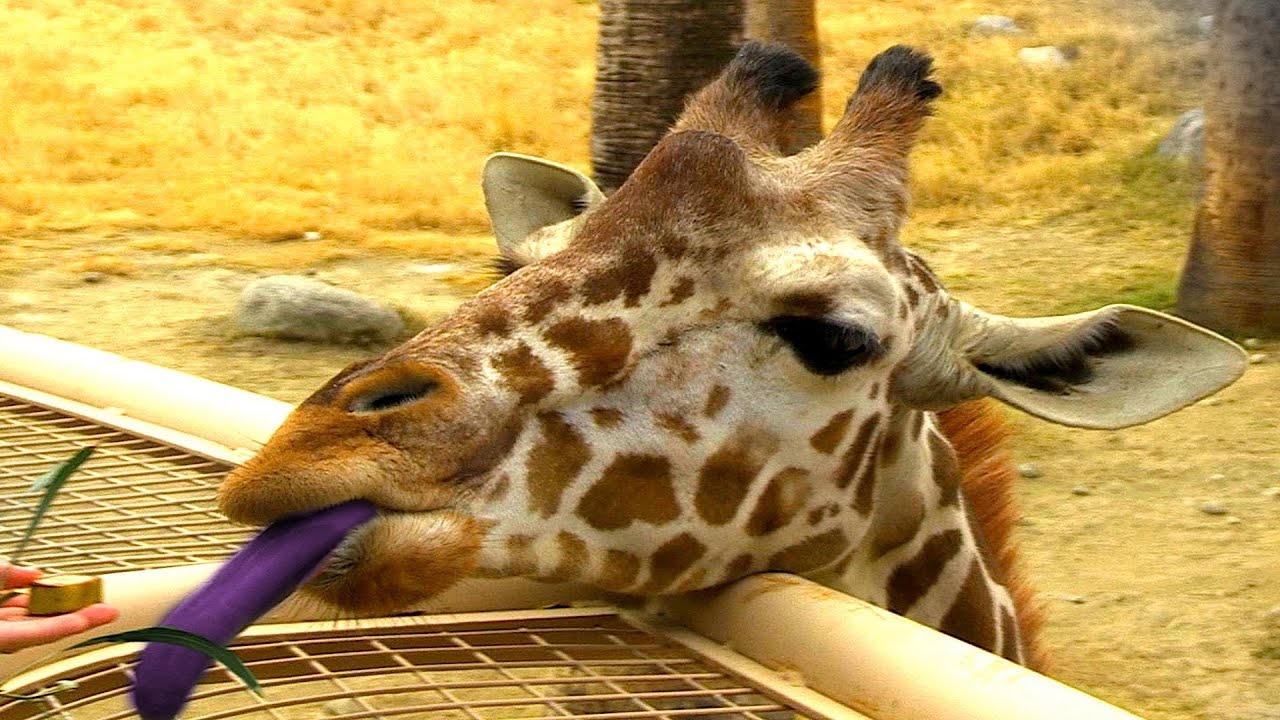
Do giraffes have blue tongues? The answer lies in this writing. Let's see to discover the best answer for this amazing question

Kết quả hình ảnh cho Why do giraffes have blue tongues?

Melanin, which creates dark pigmentation in skin, is responsible for giraffe tongues' dark color. Although it is unknown exactly why giraffes have tongues that appear blue, purple and sometimes almost black, scientists believe that the animals' tongues have evolved this way for sun protection.
Related to: giraffe baby

Kết quả hình ảnh cho Why do giraffes have blue tongues?

Giraffes have prehensile tongues that wrap around leaves and can grow to be up to 20 inches in length. When feeding, the animals' tongues are frequently out of their mouths and exposed to sunlight, so the dark coloration serves to prevent them from getting sunburned. The underside of giraffes' tongues is a light pink color because it does not get as much sun and therefore needs less protection.

Vitamin c foods may be the most familiar of all of the nutrients. Keep reading to know more about the highest foods that concludes vitamin C

1: Peppers (Yellow Bell Peppers)

Vitamin C in 100g Per 10 strips (52g) Per large pepper (186g)
183.5mg (306% DV) 95.4mg (159% DV) 341.3mg (569% DV)
Other Peppers High in Vitamin C (%DV per large pepper):Sweet Red Peppers (349%), and Sweet Green Peppers (220%). Click to see complete nutrition facts.


2: Guavas 

Vitamin C in 100g Per cup (165g) Per fruit (55g)
228.3mg (381% DV) 376.7mg (628% DV) 125.6mg (209% DV)


3: Dark Green Leafy Vegetables (Kale)

Vitamin C in 100g Per cup chopped (67g)
120mg (200% DV) 80.4mg (134% DV)
Other Dark Green Leafy Vegetables High in Vitamin C (%DV per cup, chopped): Turnip Greens (55%), Swiss Chard (18%), and Spinach (14%). Click to see complete nutrition facts.


4: Kiwifruit (Green)

Vitamin C in 100g Per cup, sliced (180g) Per fruit (69g)
92.7mg (155% DV) 166.9mg (278% DV) 64mg (107% DV)
Gold Kiwifruit are also High in Vitamin C (%DV per fruit):(151%). Click to see complete nutrition facts.


5: Broccoli

Vitamin C in 100g Per cup chopped (92g)
89.2mg (149% DV) 81.2mg (135% DV)
Other Brassica Vegetables High in Vitamin C (%DV per cup): Brussels Sprouts (125%), Green Cauliflower (94%), Cauliflower (86%), Red Cabbage (85%), and Cabbage (60%). Click to see complete nutrition facts.


6: Berries (Strawberries)

Vitamin C in 100g Per cup sliced (166g) 1 large strawberry (18g)
58.8mg (98% DV) 97.6mg (163% DV) 10.6mg (18% DV)
Other Berries High in Vitamin C (%DV per cup): Raspberries (54%), Blackberries (50%) and Blueberries (24%).